

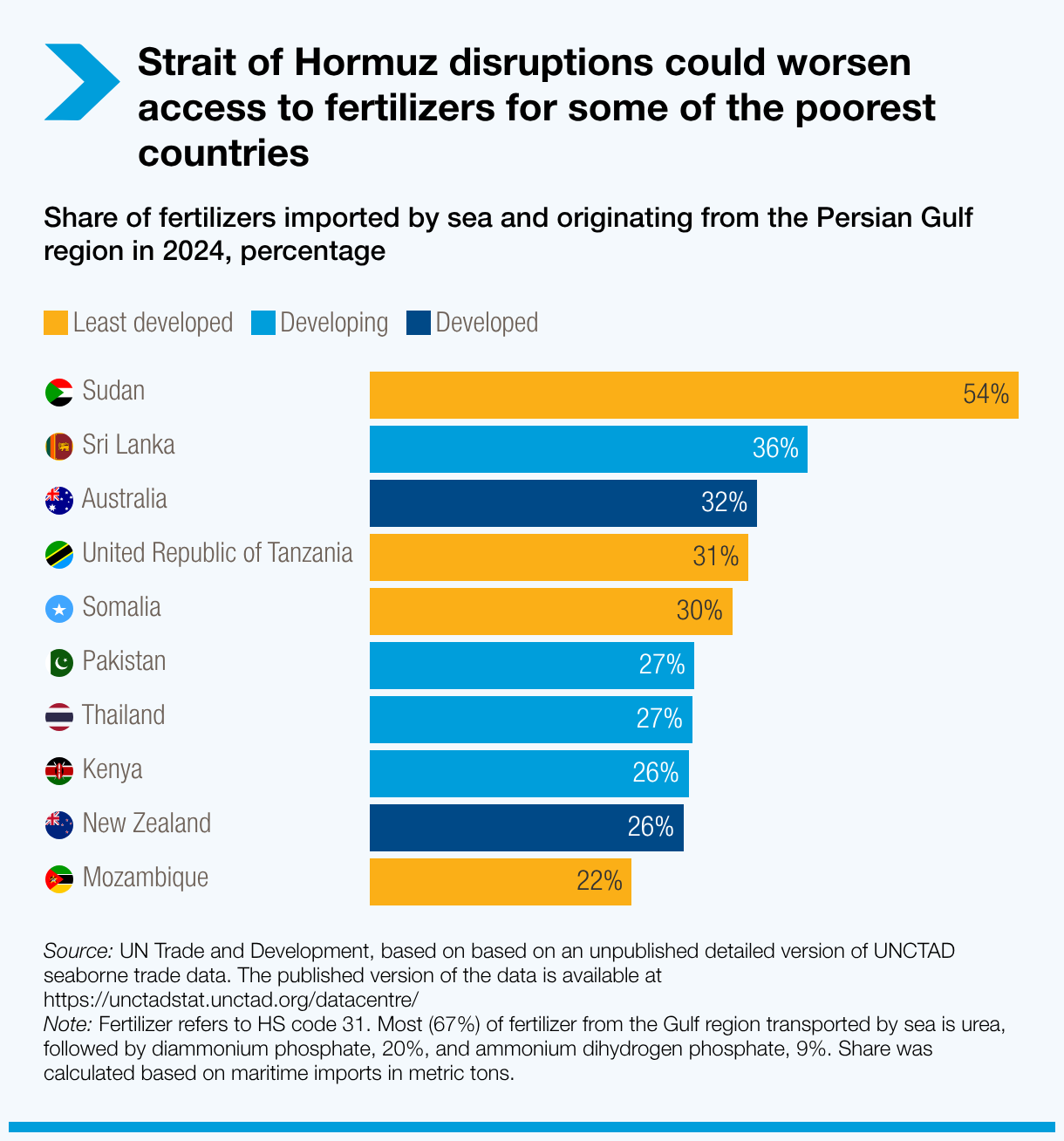
The Strait of Hormuz is one of the world’s most critical maritime chokepoints, carrying around a quarter of global seaborne oil trade and significant volumes of liquefied natural gas and fertilizers.

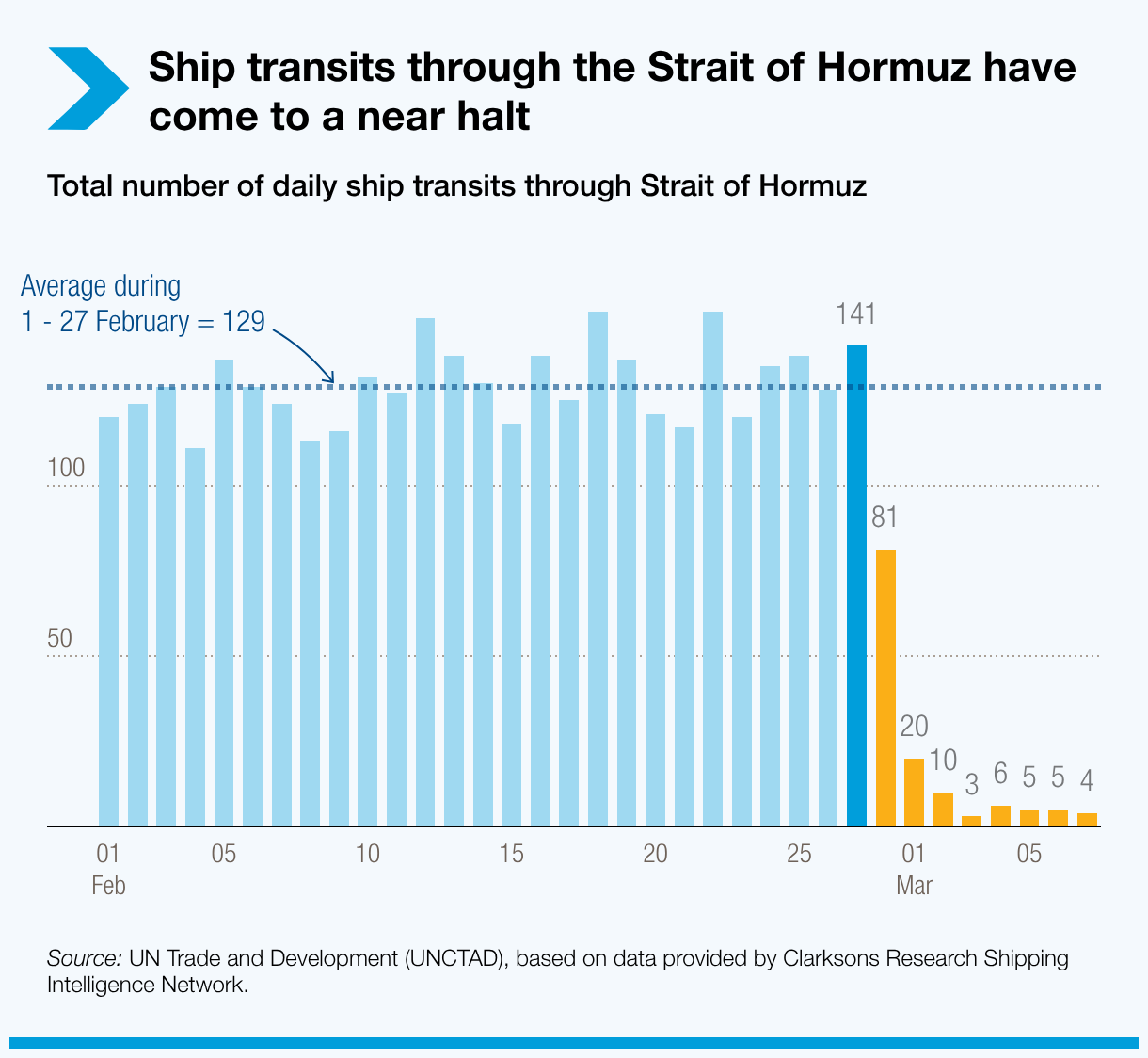
The ongoing military escalation in the region has disrupted shipping flows through this narrow passage. The resulting ripple effects go far beyond the region, affecting energy markets, maritime transport and global supply chains.
These developments raise concerns for global trade and development prospects. Oil markets have reacted quickly, with Brent crude prices now rising above $90 per barrel.
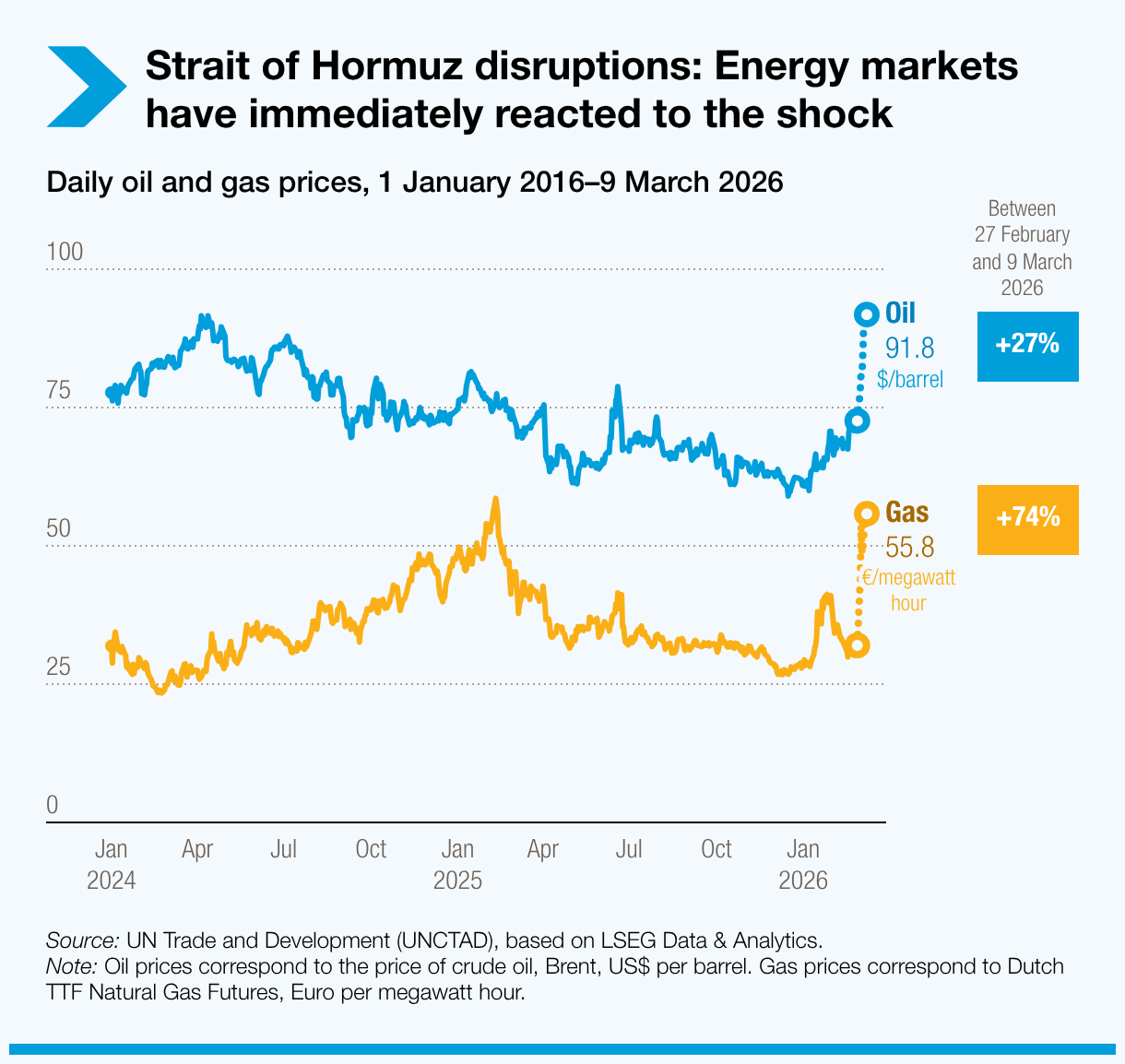
Higher energy, fertilizer and transport costs – including freight rates, bunker fuel prices and insurance premiums – may increase food costs and intensify cost-of-living pressures, particularly for the most vulnerable.
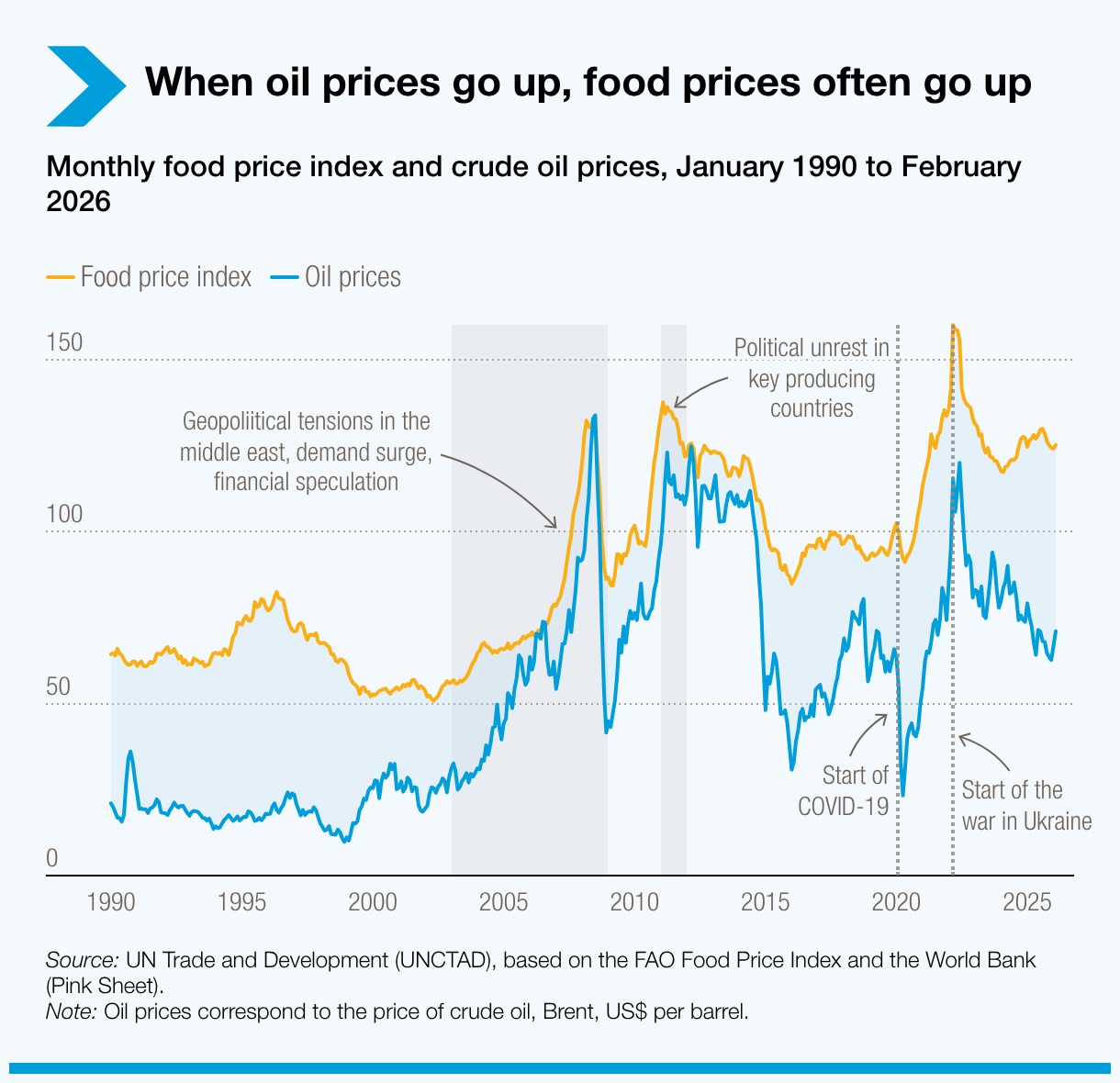
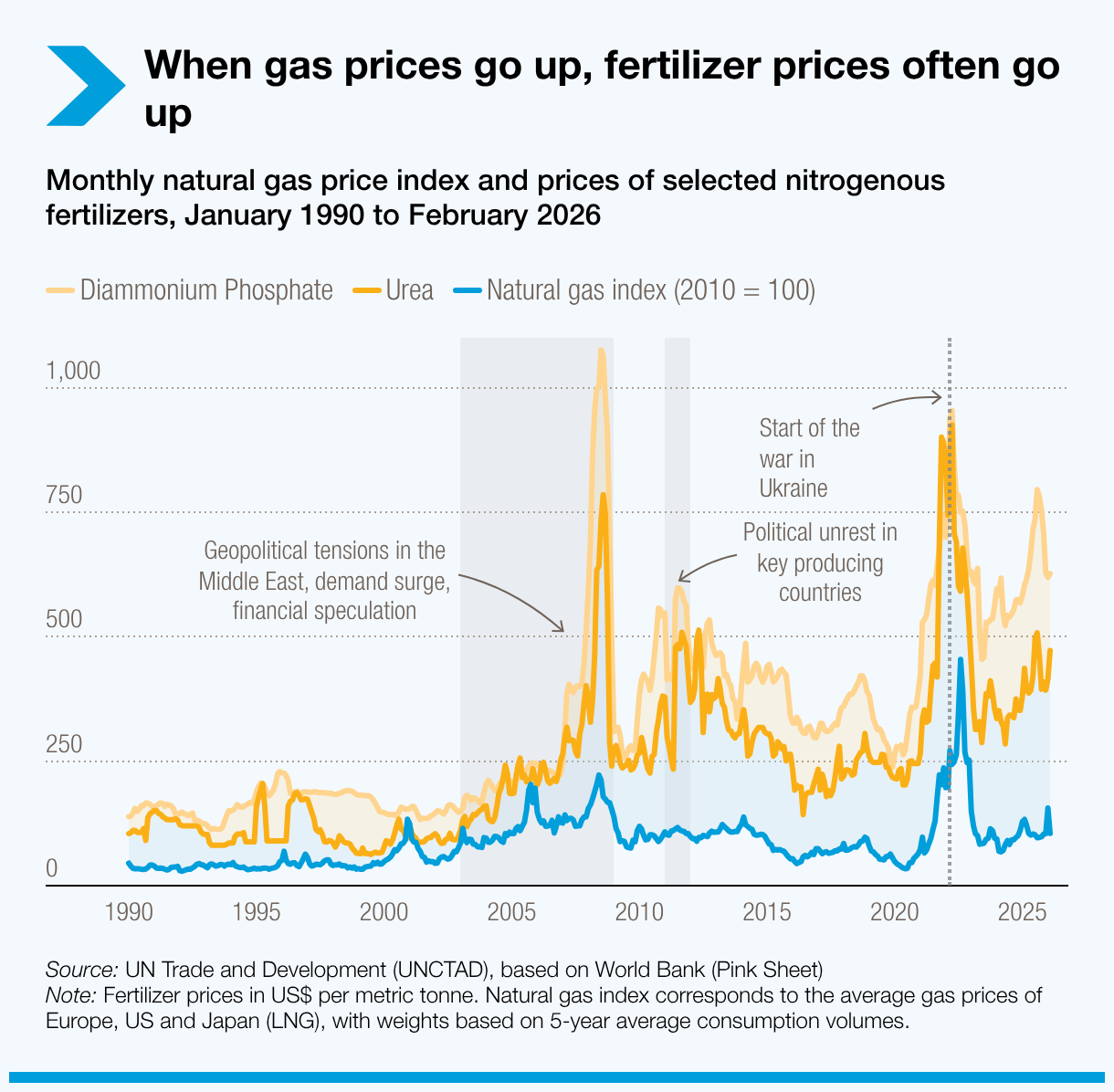
Similar repercussions were observed during recent global shocks, including the COVID-19 pandemic and at the beginning of the war in Ukraine, which showed how disruptions in energy, transport and agricultural inputs can propagate across interconnected markets.
The current shock comes at a time when many developing economies struggle to service their debt, tightening fiscal space and limited capacity to absorb new price shocks.
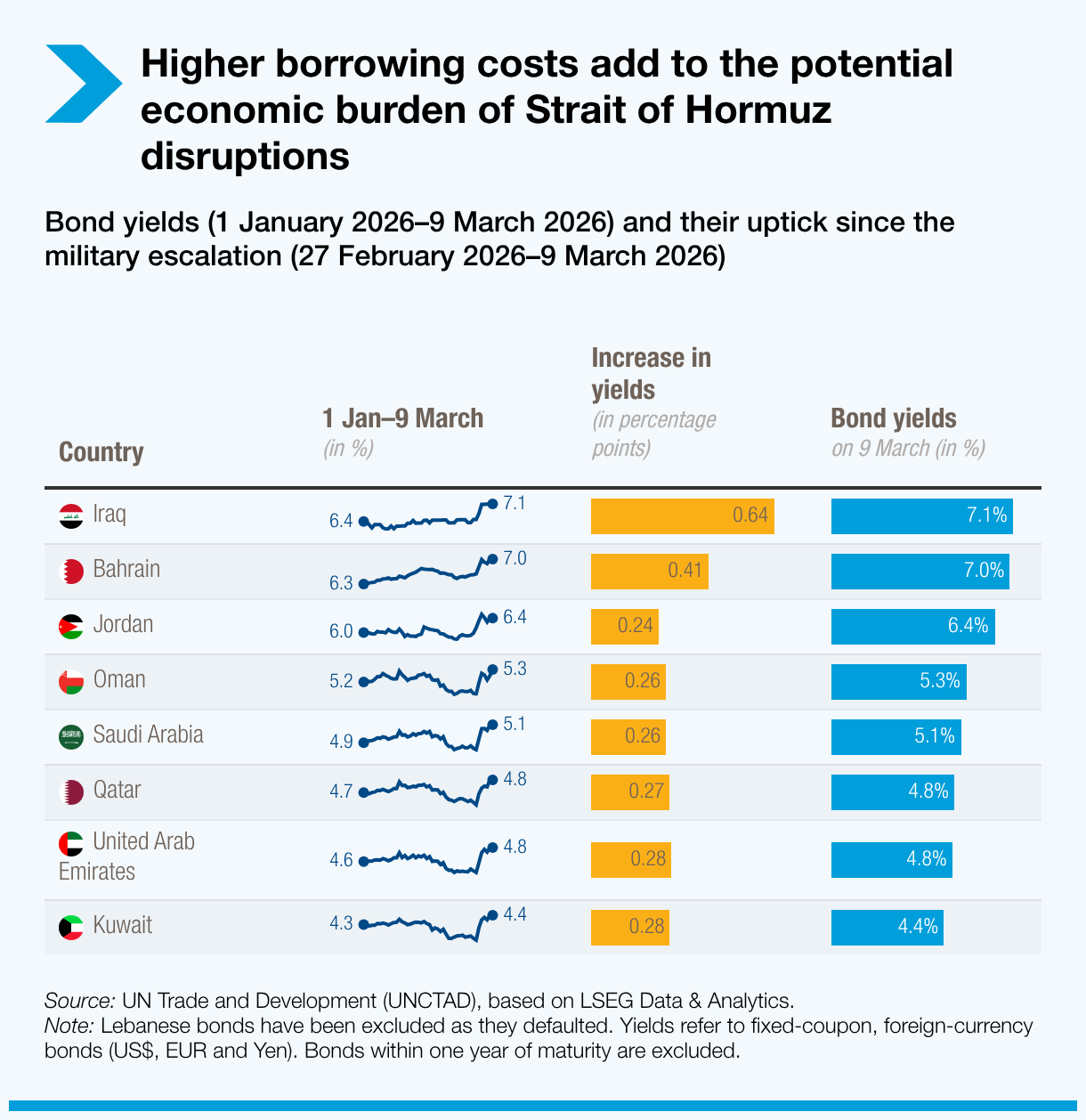
While the overall global economic impacts will depend on the duration and scale of the disruption, the situation highlights the importance of continued monitoring, particularly implications for vulnerable economies.
Key implications and considerations
- Disruptions in the Strait of Hormuz underscore the vulnerability of critical maritime chokepoints to geopolitical tensions and their potential to transmit shocks across supply chains and commodity markets.
- Reducing risks to global trade and development, including environmental risks, requires de-escalation and safeguarding maritime transport, ports and seafarers, and other civilian infrastructure, while maintaining secure trade corridors in line with international law and freedom of navigation
- Economic impacts, both globally and for the region, will depend on the duration, intensity and geographic scope of the tensions. Continued monitoring is essential to assess evolving risks and their potential impacts.
- Socio-economic implications for developing economies: Many developing countries already face high debt service burdens, limited fiscal space and constrained access to finance. In this context, rising energy, transport and food costs could strain public finances and increase pressure on household budgets, potentially heightening economic and social pressures and complicating progress toward sustainable development, particularly in economies heavily dependent on imported energy, fertilizers and staple foods.